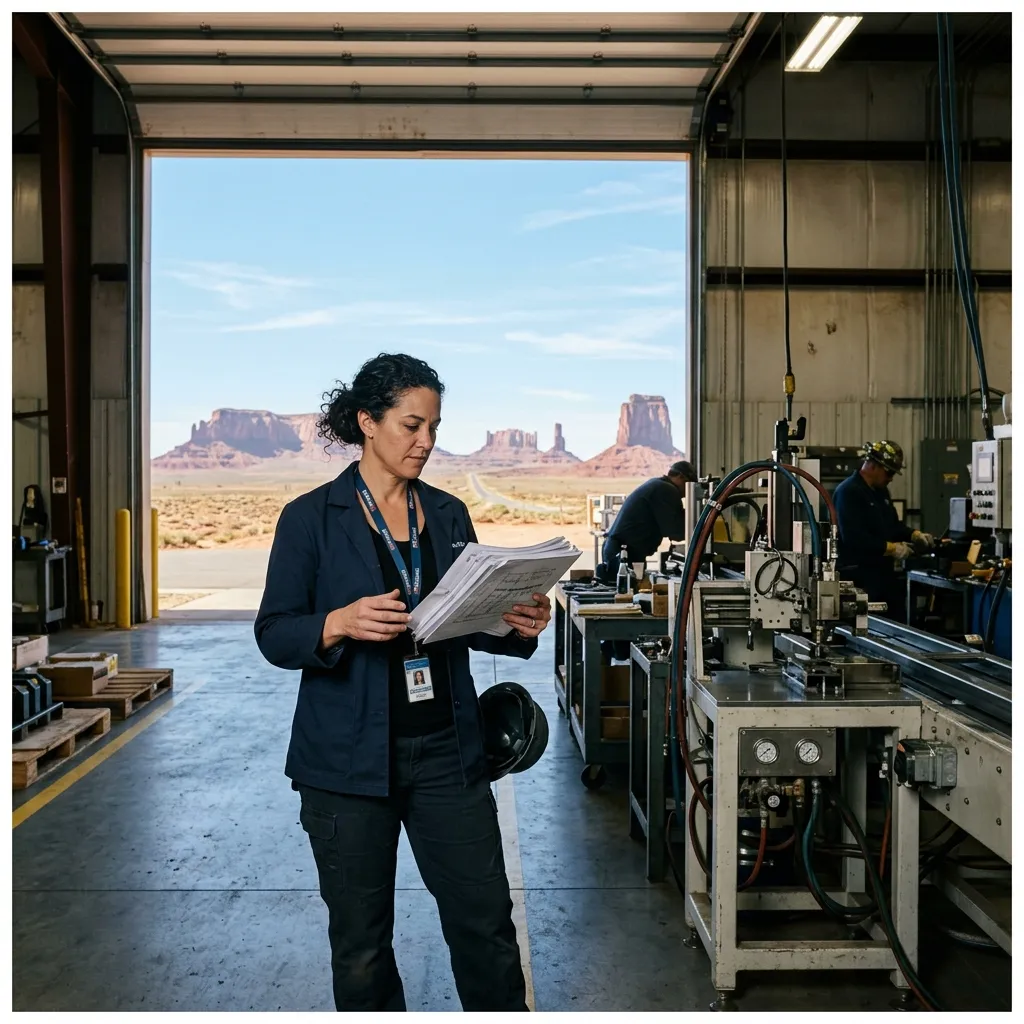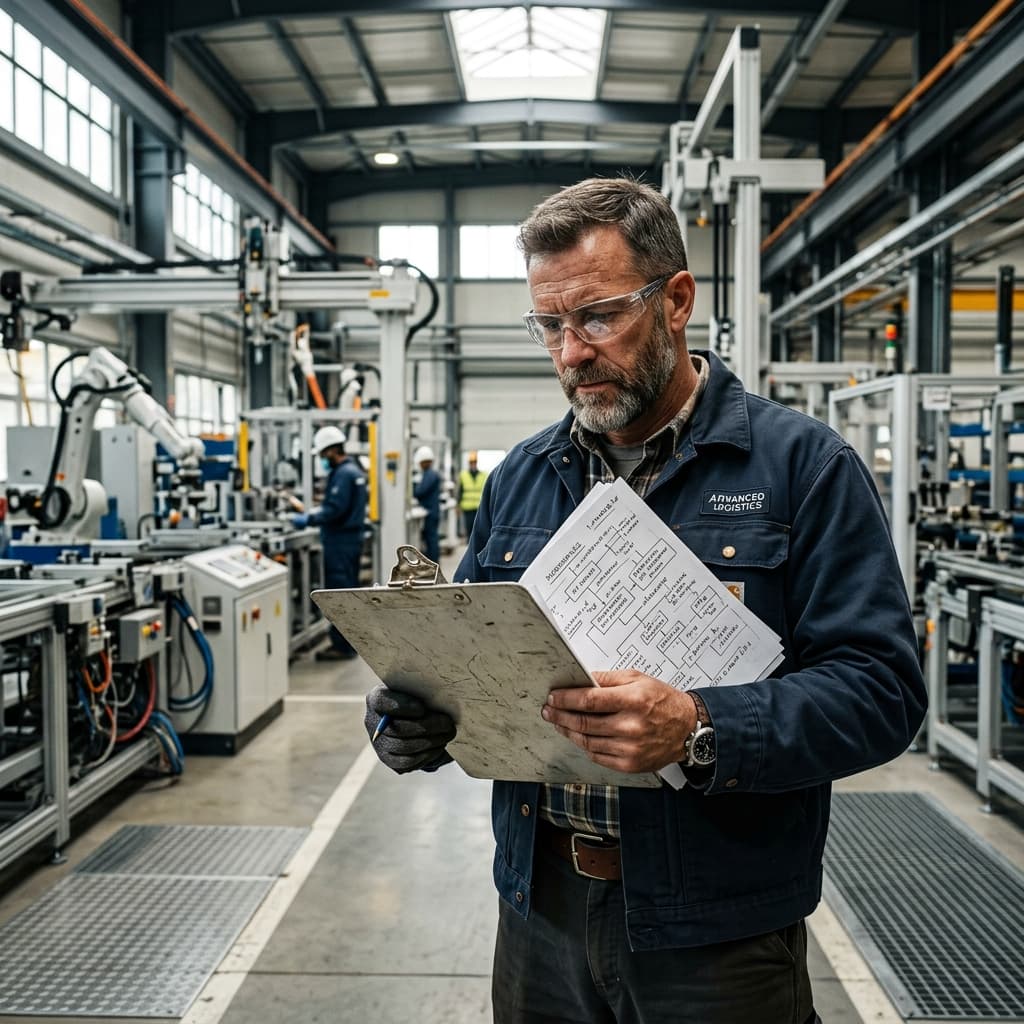
The Feature Bloat Problem
For the past two decades, the advice for manufacturing firms was simple: Buy, don't build. Implement a massive generic ERP like SAP, Oracle, or Epicor, and hire expensive consultants to customize it until it somewhat fits your business. In 2026, this advice is financially toxic.
Generic manufacturing software is built to be sold to everyone—from aerospace assembly to food packaging. It includes modules for industries you will never enter, compliance standards that don't apply to your sector, and workflow templates that don't match your shop floor reality.
Your operators are forced to navigate complex interfaces full of irrelevant fields, leading to data entry errors, massive frustration, and the inevitable shadow spreadsheet that actually runs your floor.
Key Insight
The Friction Point: Because generic ERPs try to serve every manufacturing vertical, they do nothing well for any specific one. Your operators click through 8 screens to log a batch completion. Your quality team maintains paper checklists because the inspection module doesn't fit your specs. Your floor managers run shadow spreadsheets because the reporting module is too slow.
The Custom Software Revolution in Manufacturing
The economics of software development have changed dramatically. Using modern frameworks and AI-accelerated development, a Full-Stack AI Engineer can build a highly specific, lightning-fast manufacturing execution system (MES) in a fraction of the time and cost of a legacy ERP implementation.
Role-Specific Dashboards
A floor operator sees a tablet UI with exactly 3 buttons—no menus, no navigation, no irrelevant data. The warehouse manager sees an inventory grid. The CEO sees a high-level analytics dashboard with real-time OEE. Custom software shows people exactly what they need, nothing more.
Direct IoT & Machine Integration
Custom APIs interface directly with shop floor machinery (SCADA, PLCs, CNC controllers) using OPC-UA, MQTT, or REST protocols. Real-time production data flows into PostgreSQL without manual entry, enabling automated cycle counting and predictive maintenance.
Zero Per-Seat Licensing
Put a tablet at every workstation. Give access to every temp worker, every line supervisor, every sub-contractor. Because you own the software, your cost does not increase when you hire—ever. Scale from 50 to 500 users at the same hosting cost.
Real-Time Quality Enforcement
Custom inspection workflows match your exact tolerance specifications, with photo capture, digital signatures, and automatic hold-and-release logic. No paper checklists, no data re-entry, no quality escapes.
Generic ERP vs. Custom MES: The Manufacturing Breakdown
| Factor | Generic ERP (SAP/Oracle/Epicor) | Custom Manufacturing Platform |
|---|---|---|
| Implementation Time | 9–18 months | 8–14 weeks |
| Per-Seat Licensing | $100–$300/user/month | $0 (unlimited users) |
| Feature Relevance | 15–20% of features actually used | 100% built for your specific processes |
| Machine Integration | Paid connectors, middleware required | Native OPC-UA/MQTT/REST integration |
| Operator Training | Weeks to months | Hours (purpose-built UI) |
| Competitive Advantage | Same software as every competitor | Proprietary system encoding your IP |
The Ownership Advantage
When you build an owned, custom manufacturing platform, you are not just buying software—you are acquiring a competitive advantage that cannot be replicated by competitors stuck using the exact same generic tools.
""We dumped our $16,000/month Epicor license. The custom MES we built in 10 weeks costs $900/month to host and our operators adopted it in 2 days. Production data entry errors dropped 45% in the first month."
"
Verification Checklist
- Audit how many ERP features your operators actually use daily (hint: it is less than 20%)
- Calculate your total per-seat ERP licensing cost projected over 5 years
- Document every shadow spreadsheet and paper system your floor teams maintain alongside the ERP
- Inventory your shop floor machine connectivity: which PLCs and controllers expose data via OPC-UA or MQTT?
- Request a custom MES scoping session that starts with shop floor observation, not a requirements document
Manufacturing software decisions carry outsized consequences because they directly impact production throughput, quality control, and regulatory compliance. Unlike SaaS tools for marketing or sales, manufacturing software touches physical processes where bugs translate to scrapped materials, missed shipments, and safety incidents.
The build-vs-buy calculus shifts dramatically once a manufacturer's operations reach sufficient complexity. Generic MES (Manufacturing Execution Systems) platforms force you to adapt your production workflow to the software's assumptions—an inversion of how technology should serve operations.
| Decision Factor | Buy (SaaS MES) | Build (Custom) |
|---|---|---|
| Year 1 Cost | $80K-$200K licensing | $120K-$250K development |
| Customization | Configuration only | Unlimited code-level control |
| Integration | Limited connectors | Native API to any system |
| Shop Floor UX | Generic desktop UI | Purpose-built touchscreen interfaces |
| Data Ownership | Vendor cloud | Your private infrastructure |
When Custom Manufacturing Software Becomes Essential
- Unique Process Requirements: Your production workflow includes proprietary steps that no off-the-shelf MES can model without extensive customization.
- Integration Complexity: You need real-time data flow between PLCs, SCADA systems, ERP, and quality management that requires custom middleware.
- Regulatory Specificity: Your industry (medical devices, aerospace, food) requires audit trails and documentation that generic platforms handle poorly.
- Scale Economics: Per-seat licensing for shop floor terminals becomes prohibitively expensive beyond 50+ workstations.
- Competitive Differentiation: Your manufacturing process IS your competitive advantage, and exposing it to a SaaS vendor's data practices is strategically unacceptable.
For manufacturing technology analysis, see McKinsey's Industry 4.0 research and NIST's Smart Manufacturing resources.
The build-vs-buy decision in manufacturing must account for a factor that generic SaaS analysis frameworks ignore: the physical world. Manufacturing software controls real machines, tracks real inventory, and affects real worker safety. When a SaaS platform goes down for 2 hours, your production line stops. When their batch processing delays your quality reports by 30 minutes, non-conforming product ships to customers. These aren't abstract concerns—they're the daily operational reality that makes custom manufacturing software not a luxury, but a strategic necessity for any operation serious about quality and throughput.
The decision framework must also account for regulatory momentum. FDA, EPA, and OSHA are increasingly mandating electronic record-keeping with specific data integrity requirements that generic SaaS platforms handle poorly. Building a custom system with compliance engineered into the database schema from day one is significantly cheaper than retrofitting compliance onto a generic platform after a regulatory audit finding.
The manufacturing digital transformation is accelerating unevenly. While large enterprises deploy Industry 4.0 initiatives backed by millions in capital expenditure, mid-market manufacturers face a different reality: they need the same digital capabilities but at a fraction of the cost and deployment timeline. Custom software built on modern web frameworks bridges this gap by delivering enterprise-grade production intelligence at mid-market budgets, typically 60-80% less than legacy MES platform deployments.
Quality traceability represents the highest-value use case for custom manufacturing software. When a customer returns a defective product, the ability to trace every component, process step, and operator decision that contributed to that unit production is both a regulatory requirement and a competitive advantage. Custom systems provide this genealogy tracking natively, while generic platforms require expensive add-on modules that never quite fit the specific compliance requirements of specialized manufacturing processes.
The Shop Floor Digital Twin
Modern manufacturing software must bridge the gap between the digital and physical worlds. A digital twin of the production floor, built on real-time sensor data flowing through MQTT into a PostgreSQL time-series database, enables predictive analytics that transform reactive maintenance into proactive optimization. When a CNC machine vibration signature begins deviating from its baseline pattern, the custom system can automatically schedule preventive maintenance during the next planned downtime window, preventing unplanned production stoppages that cost manufacturers an average of $260,000 per hour according to Aberdeen Research.
The competitive advantage of custom manufacturing software crystallizes in quality management. When every production parameter is captured digitally and correlated with downstream quality outcomes, machine learning models can identify the specific combinations of temperature, pressure, speed, and material batch that produce optimal results. This level of process optimization is impossible with generic MES platforms that store data in proprietary formats inaccessible to custom analytics pipelines.
The Hidden Cost of Manufacturing Platform Rigidity
Generic manufacturing platforms impose workflow rigidity that directly conflicts with the operational flexibility mid-market manufacturers need to compete. When a key customer requests a process modification, a configuration change, or a reporting format adjustment, the vendor response is predictable: submit a feature request, wait 6-12 months, and hope the product team prioritizes it. Custom platforms implement the same change in days, maintaining the agility that differentiates mid-market manufacturers from their larger, slower-moving competitors. This responsiveness compounds into a significant competitive advantage over multi-year timeframes.
Supply chain visibility in manufacturing extends beyond first-tier suppliers. Custom platforms integrate with EDI networks, supplier portals, and real-time freight APIs to provide true multi-tier visibility. When a critical raw material shipment is delayed by weather in a different time zone, the custom system automatically recalculates production schedules, notifies affected customers, and proposes alternative sourcing options. This proactive supply chain management prevents the costly firefighting that consumes 20-30% of operations management bandwidth at manufacturers running on disconnected tools.
Real-Time Production Analytics
The transition from batch reporting to real-time production analytics represents the single highest-ROI technology investment available to mid-market manufacturers. When supervisors can see actual versus planned production rates updating every 30 seconds on shop floor displays, the behavioral impact is immediate: teams self-correct before small delays compound into missed shipment deadlines. Custom dashboards built on WebSocket connections to PostgreSQL time-series data deliver this real-time visibility at a fraction of the cost of proprietary MES modules that charge per-display licensing fees.
Predictive maintenance alone justifies the investment in custom manufacturing platforms. When machine sensor data flows through an ML pipeline trained on historical failure patterns specific to your equipment, the system identifies developing problems 48-72 hours before they cause unplanned downtime. For a mid-market manufacturer where each hour of unplanned downtime costs $15,000-$50,000, preventing even a single major failure per quarter delivers ROI that exceeds the entire annual platform cost. Generic platforms offer predictive maintenance as an expensive add-on with models trained on generic industry data that lack the specificity needed for reliable predictions on your unique equipment fleet.
Manufacturing software decisions carry outsized consequences because they directly impact production throughput, quality control, and regulatory compliance. Unlike SaaS tools for marketing or sales, manufacturing software touches physical processes where bugs translate to scrapped materials, missed shipments, and safety incidents.
The build-vs-buy calculus shifts dramatically once a manufacturer's operations reach sufficient complexity. Generic MES (Manufacturing Execution Systems) platforms force you to adapt your production workflow to the software's assumptions—an inversion of how technology should serve operations.
| Decision Factor | Buy (SaaS MES) | Build (Custom) |
|---|---|---|
| Year 1 Cost | $80K-$200K licensing | $120K-$250K development |
| Customization | Configuration only | Unlimited code-level control |
| Integration | Limited connectors | Native API to any system |
| Shop Floor UX | Generic desktop UI | Purpose-built touchscreen interfaces |
| Data Ownership | Vendor cloud | Your private infrastructure |
When Custom Manufacturing Software Becomes Essential
- Unique Process Requirements: Your production workflow includes proprietary steps that no off-the-shelf MES can model without extensive customization.
- Integration Complexity: You need real-time data flow between PLCs, SCADA systems, ERP, and quality management that requires custom middleware.
- Regulatory Specificity: Your industry (medical devices, aerospace, food) requires audit trails and documentation that generic platforms handle poorly.
- Scale Economics: Per-seat licensing for shop floor terminals becomes prohibitively expensive beyond 50+ workstations.
- Competitive Differentiation: Your manufacturing process IS your competitive advantage, and exposing it to a SaaS vendor's data practices is strategically unacceptable.
For manufacturing technology analysis, see McKinsey's Industry 4.0 research and NIST's Smart Manufacturing resources.
The build-vs-buy decision in manufacturing must account for a factor that generic SaaS analysis frameworks ignore: the physical world. Manufacturing software controls real machines, tracks real inventory, and affects real worker safety. When a SaaS platform goes down for 2 hours, your production line stops. When their batch processing delays your quality reports by 30 minutes, non-conforming product ships to customers. These aren't abstract concerns—they're the daily operational reality that makes custom manufacturing software not a luxury, but a strategic necessity for any operation serious about quality and throughput.
The decision framework must also account for regulatory momentum. FDA, EPA, and OSHA are increasingly mandating electronic record-keeping with specific data integrity requirements that generic SaaS platforms handle poorly. Building a custom system with compliance engineered into the database schema from day one is significantly cheaper than retrofitting compliance onto a generic platform after a regulatory audit finding.